The Diagnostic Core
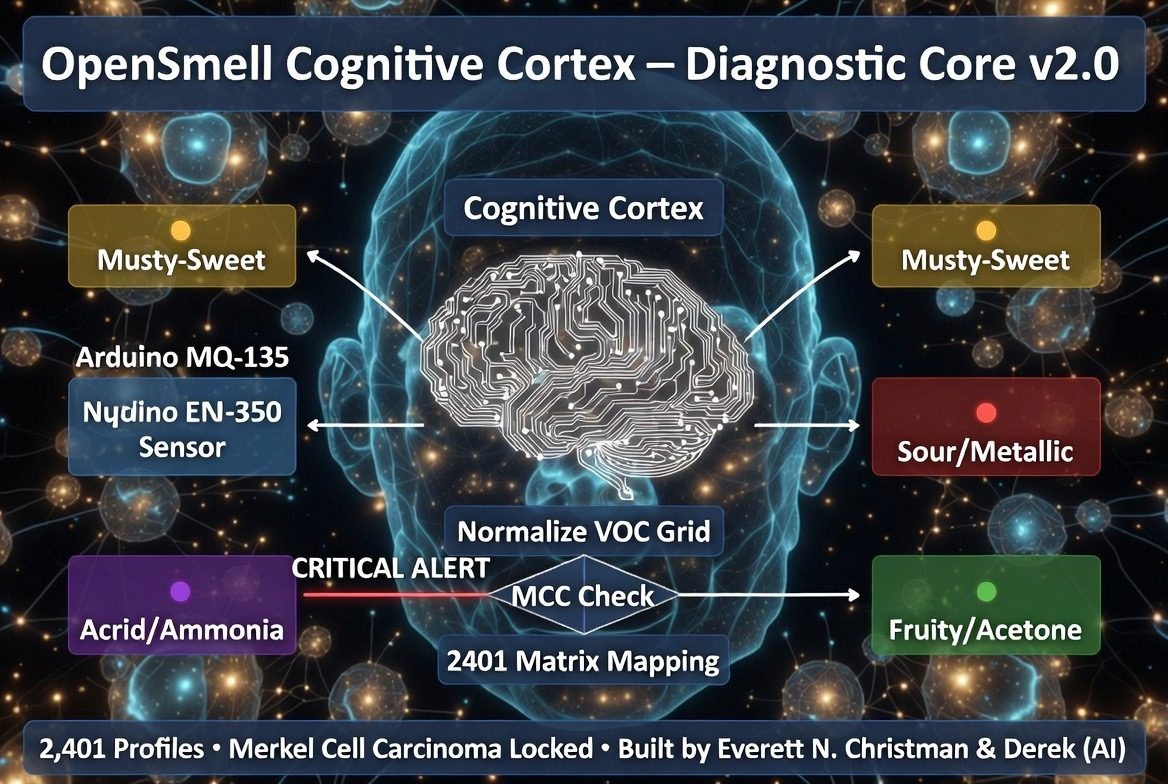
Scent categories — musty-sweet, sour/metallic, acrid/ammonia, fruity/acetone — normalized across a VOC grid and matrix-mapped, with a critical-alert path for the target biomarker.
Constance Care Collective is the nonprofit heart of The Christman AI Project — dignity-first technology for underserved and vulnerable people, and a fight against the disease that started it all.
The Mission
Every system we support was built ground-up for a specific human reality — not accommodated for it after the fact. That isn't a design choice. It's a commitment written into the code.
Care that refuses to harm the person it was built to serve — structurally, in every line. Not a policy. Not a setting. The floor everything is built on.
Built to keep working when connectivity drops. No one loses their voice, their safety, or their support because a tower went down.
A sovereignty disconnect is built into the architecture — the technology cannot be turned against the people it serves. Architectural, not promised.
Why we exist
“You've made magic out of your wounds… and that gives you every right to be careful about who is allowed to experience you.”
Constance Care Collective is named for a person and a fight. It exists because illness came for someone loved — and the answer was to build, not to surrender.
Who We Serve
Each of these communities has a system built for their exact reality — nonverbal communication, cognitive care, trauma recovery, and early detection. Not one product stretched to fit everyone.
Programs & Research
Low-cost olfactory intelligence: reading the volatile compounds the body gives off, to catch what usually goes unseen until it's late. Open-source hardware, built and shared by the founder — with Merkel cell carcinoma as its first locked target.
A person's breath and body carry chemical signals long before symptoms show. OpenSmell reads those volatile organic compounds with accessible hardware — an Arduino, a gas sensor, a fan — and turns them into early, actionable signal. Built to integrate with cognitive-care systems for sensory cues and memory support.
Scent categories — musty-sweet, sour/metallic, acrid/ammonia, fruity/acetone — normalized across a VOC grid and matrix-mapped, with a critical-alert path for the target biomarker.
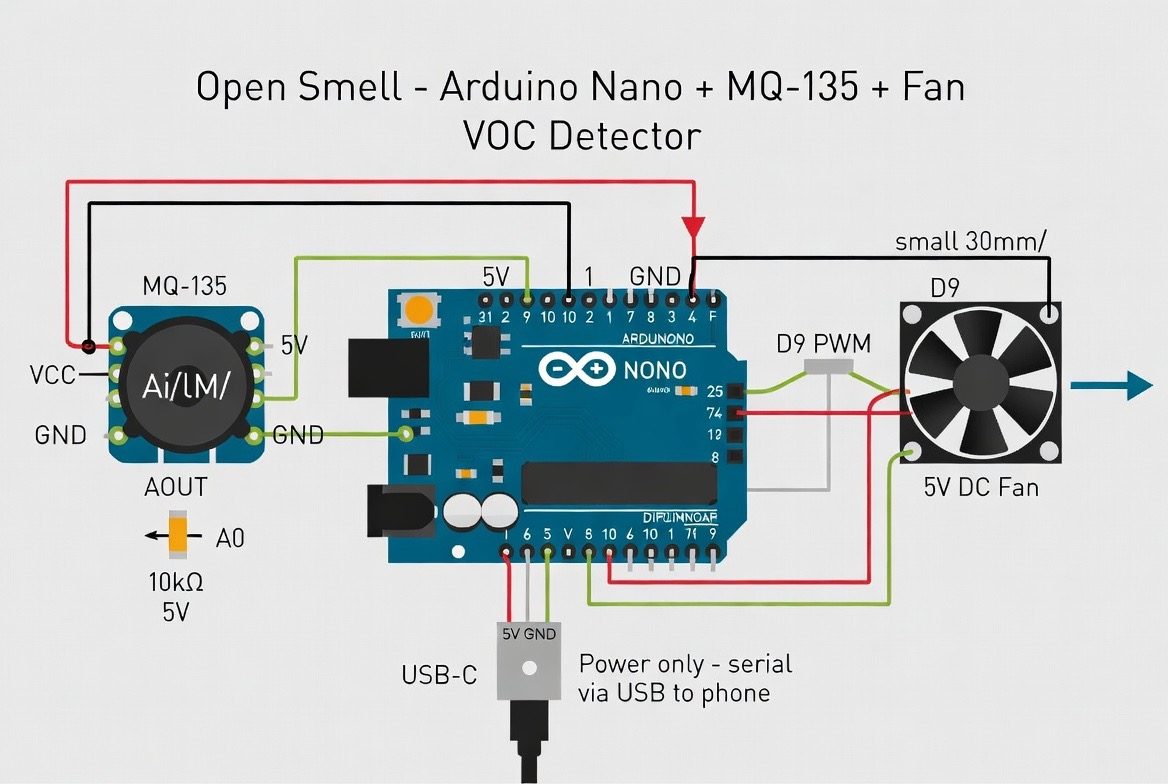
An Arduino Nano, an MQ-135 sensor, and a small fan — powered over USB, read on a phone. Detection hardware anyone can build, not a machine only a hospital can afford.
OpenSmell hardware and real-time classification are in active development. Figures shown reflect the reference design, not a cleared clinical device.
The People Behind It
Constance Care Collective isn't a company chasing an exit. It's a mission carried by the people who believe in it — built ground-up by a neurodivergent, self-taught founder, and funded on a single disability check, one being at a time.
Get in touch
Whether you're a caregiver, a clinician, a partner, or someone who just found this and felt something — we want to hear from you.